On the art of cultivating everyday luxury
I own well over 150 cookbooks. And yet, one of my most delightful culinary discoveries came from the side of a cheap little salad dressing bottle Tim bought online years ago, which I happened upon in our Colorado kitchen.
In all my years of poring over cookbooks, including those of Alice Waters, whom I consider the queen of salad, I’d never encountered this particular ratio for a French vinaigrette: two parts vinegar to one part oil.
Two parts vinegar. One part oil.
For those accustomed to the traditional three-to-one ratio of oil to vinegar, this is practically heresy. And what a delicious heresy it is.
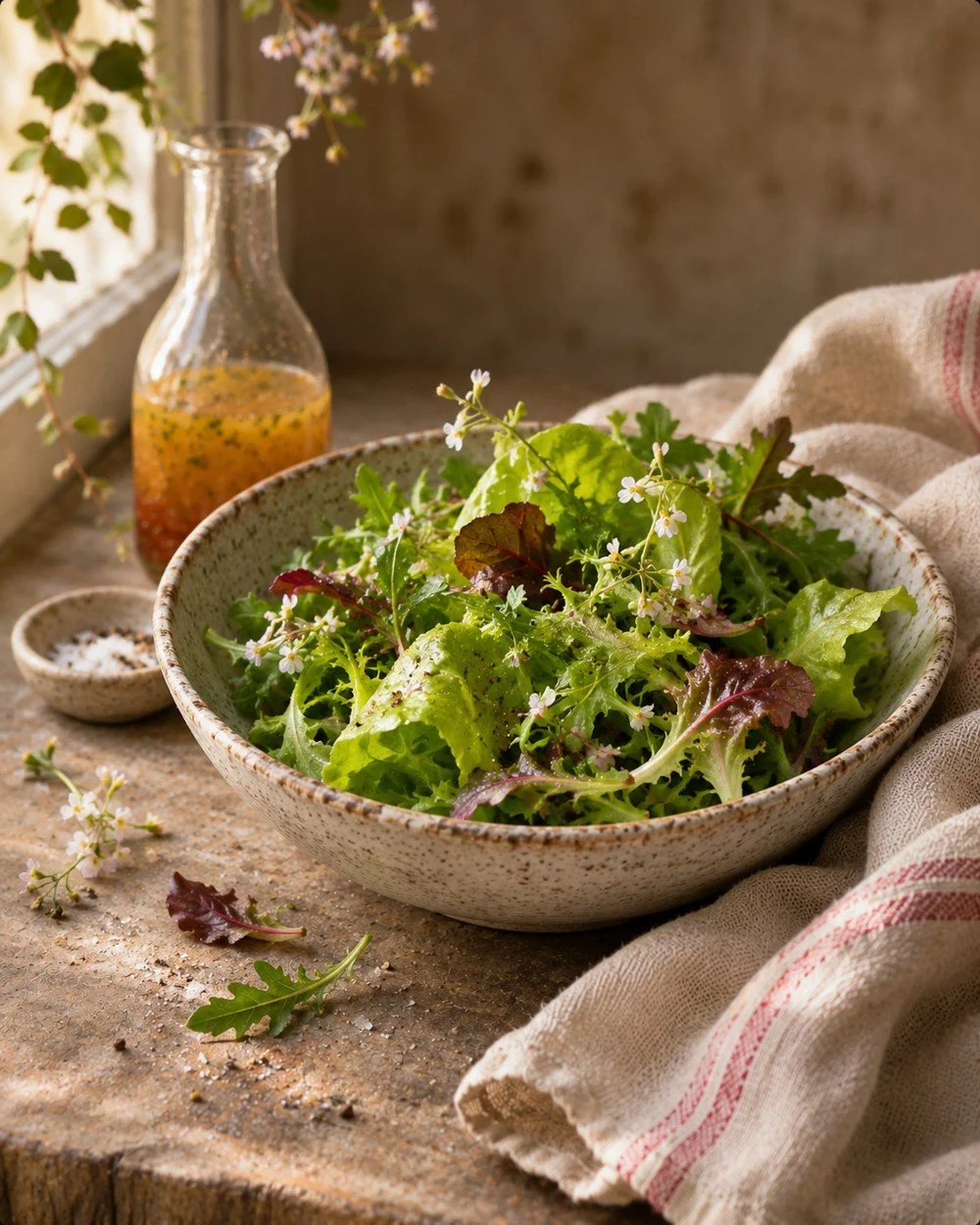
I’ve long had opinions about salad dressing, particularly when it comes to delicate spring greens. I want to taste the lettuce. I want that bright pop of acidity without the weight of all that oil. I want my greens sprightly and springy, not limp beneath the burden of an overly generous dressing.
A dash or two of this vinaigrette is all it takes.
As with most simple things in the kitchen, a good vinaigrette comes down to quality ingredients and attention to small details. Quality needn’t be expensive. My preferred olive oil is robust and moderately priced—about nine dollars for a large bottle.
I use equal parts red wine and balsamic vinegar. The balsamic lends a hint of sweetness, softening the sharpness of the red wine vinegar without sacrificing its brightness.
I’m generous with fresh herbs, though in winter I cheat a little with Gourmet Garden’s lightly dried herbs. And I prefer my garlic pounded into a paste with a mortar and pestle.
My French Vinaigrette
2 parts vinegar (equal parts red wine and balsamic)
1 part robust olive oil
1 tablespoon Dijon mustard
1–2 cloves fresh garlic, finely minced or pounded into a paste
Several generous pinches of fresh herbs
A generous pinch of kosher salt
1 teaspoon or more of sugar or honey, to taste
Combine, shake vigorously and taste.
By all means, play with your acids. Champagne vinegar, freshly squeezed lemon juice, even a little orange juice. Each brings its own lovely character. Find the particular brightness you love.
And resist the temptation to overdress your greens. A little goes a surprisingly long way.
* * *
Now, picture a cold winter evening. The last of the daylight has slipped away, and the windows have gone dark.
Pour yourself a glass of Pinot Noir, put on some jazz and light a candle or two. Let the music fill the kitchen as you prepare a buttery omelette oozing with cheese and a big, gorgeous bowl of delicate spring greens dancing in a vibrant vinaigrette.
Share the meal with someone you love, or savor the pleasure of your own company, with a good book awaiting you in the evening’s quiet hours.
There is a quiet artistry to living well, to gathering a handful of ordinary things and arranging them into something exquisite.
Perhaps the most beautiful luxuries are the ones we learn to create for ourselves, in the small, uncelebrated hours of our lives.
* * *
From My Kitchen & Bookshelf
Salad dressing recipe bottles — similar to mine, though the printed recipes and ratios may differ.